


Guided Hindu Puja — At Home
Perform puja at home —
with confidence.
Step-by-step guidance for Hindu rituals. Sanskrit mantras, AR altar setup, and bilingual narration — for every family.

Step-by-step guidance
From altar setup to final aarti — every mantra, offering, and gesture guided with audio and visual cues.
Sanskrit mantras, made accessible
Phonetic transliteration and bilingual narration in Telugu and English. No prior knowledge needed.
Perform at home, any time
A complete online Vedic puja experience — samagri list, sankalpa, AR altar setup — whenever you're ready.
Featured Pujas
View all FREE OFFER
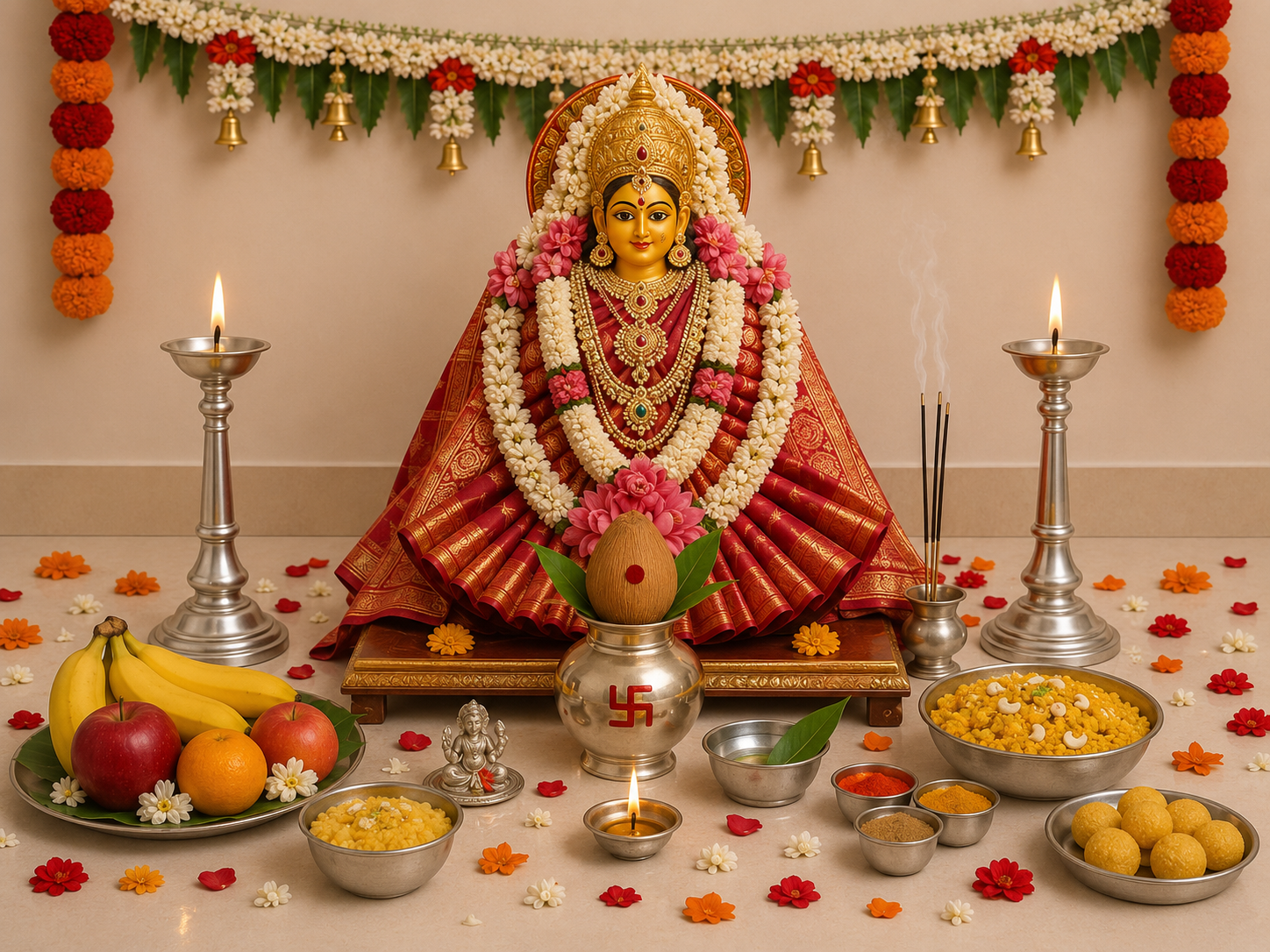
Navaratri Puja
FREEGuided, step-by-step ritual with translations.
 FREE OFFER
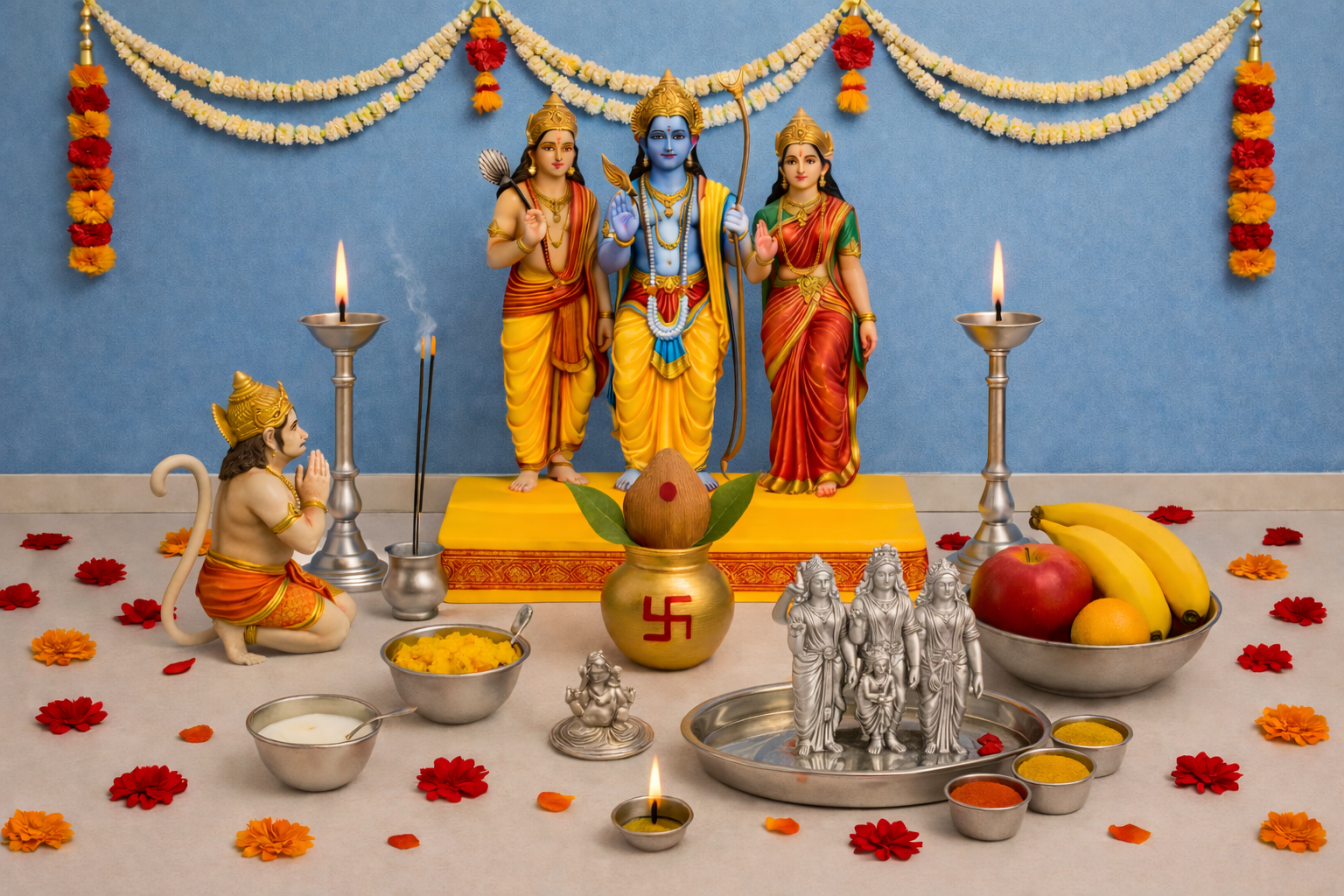
Varalakshmi Puja
FREEGuided, step-by-step ritual with translations.
 FREE OFFER
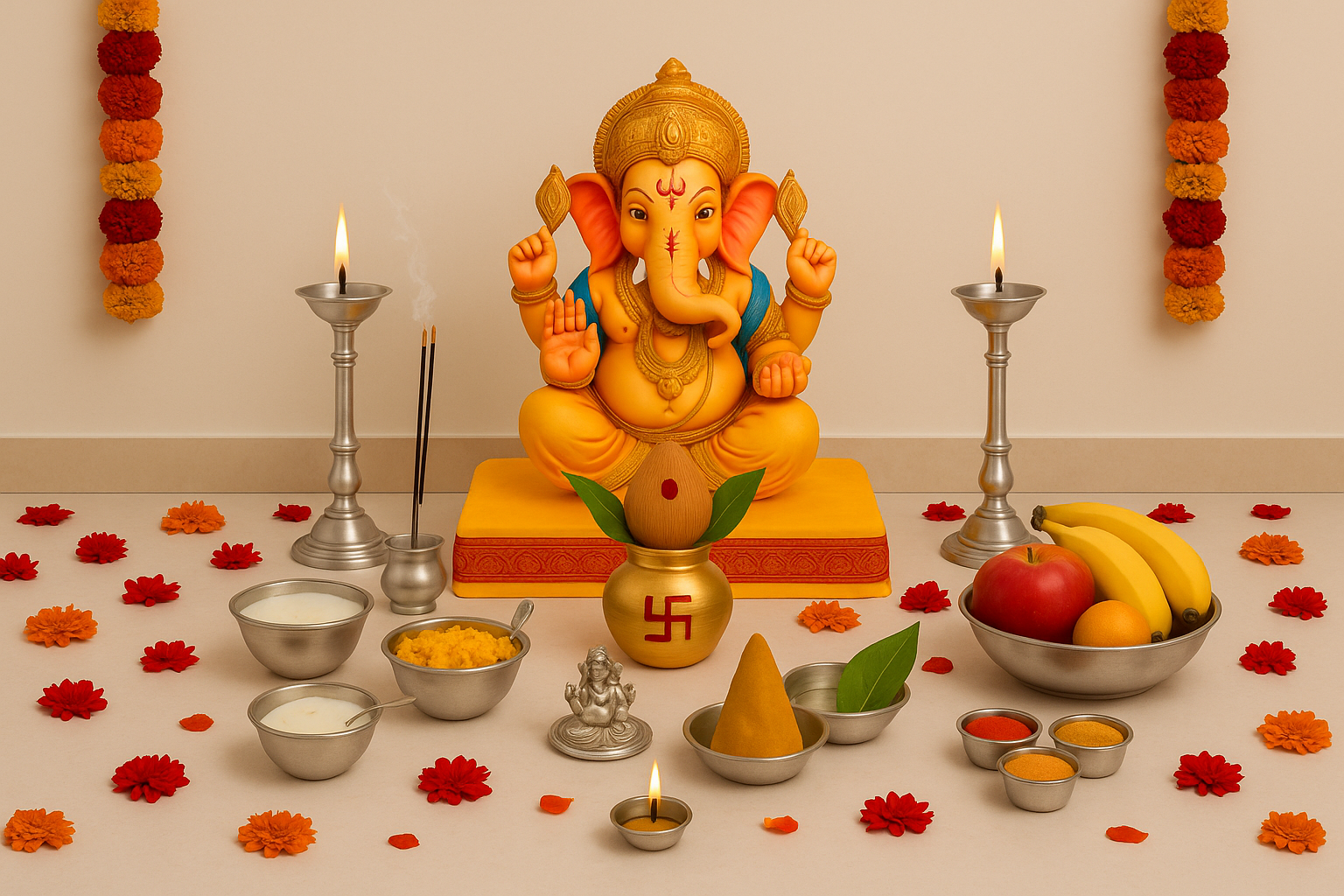
Rama Navami Puja
FREEGuided, step-by-step ritual with translations.
 FREE OFFER
Ganesha Puja
FREEGuided, step-by-step ritual with translations.
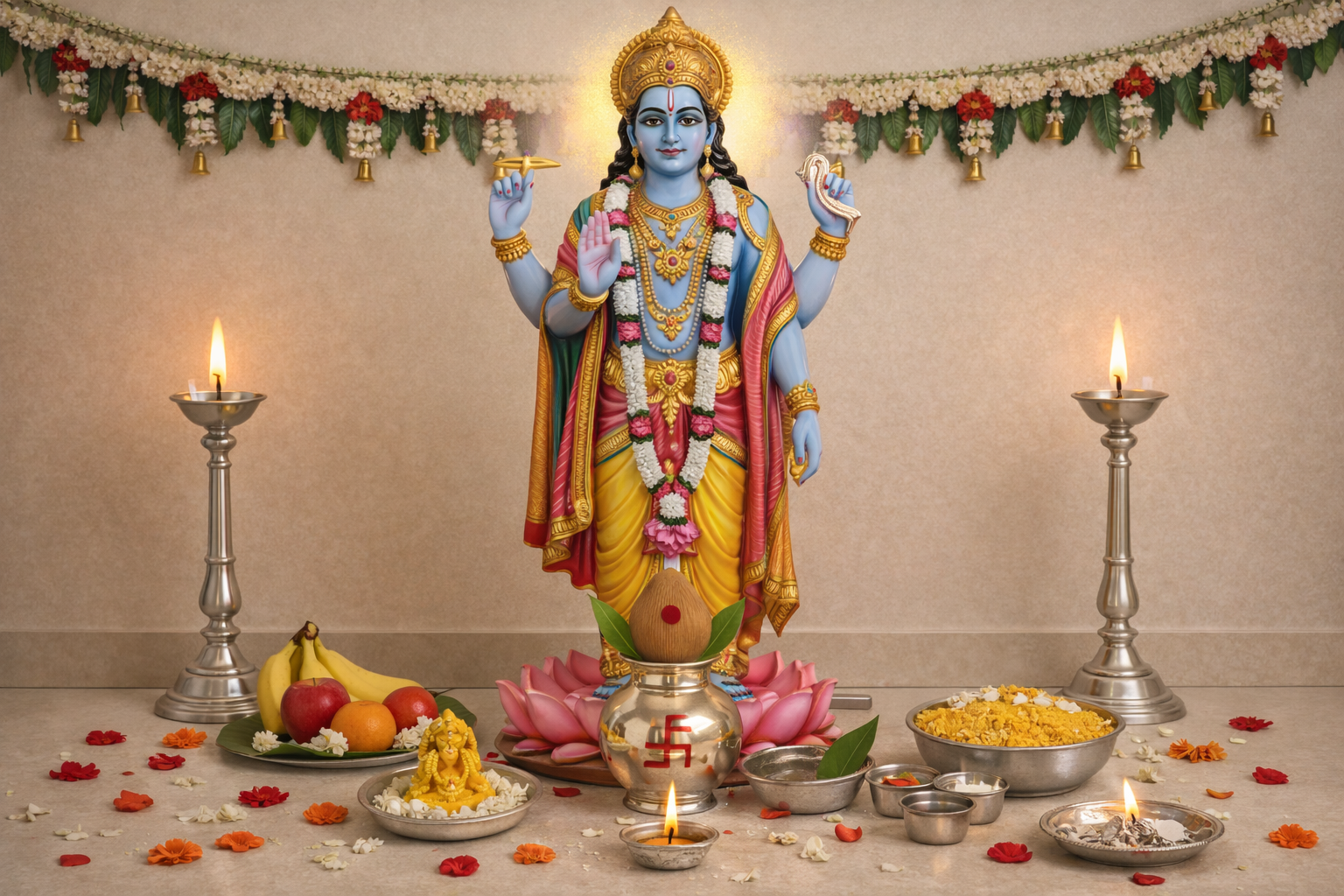
Satyanarayana Puja
$45Guided, step-by-step ritual with translations.
Our story
Why PujaZen
Puja is meant to bring peace and connection — not confusion. Here's what we set out to change.
Why Puja Feels Hard
Pujas are meant to bring peace and connection, yet for many the steps feel overwhelming. The chants are unfamiliar, priests aren't always accessible, and online videos leave you pausing and guessing through sacred moments.

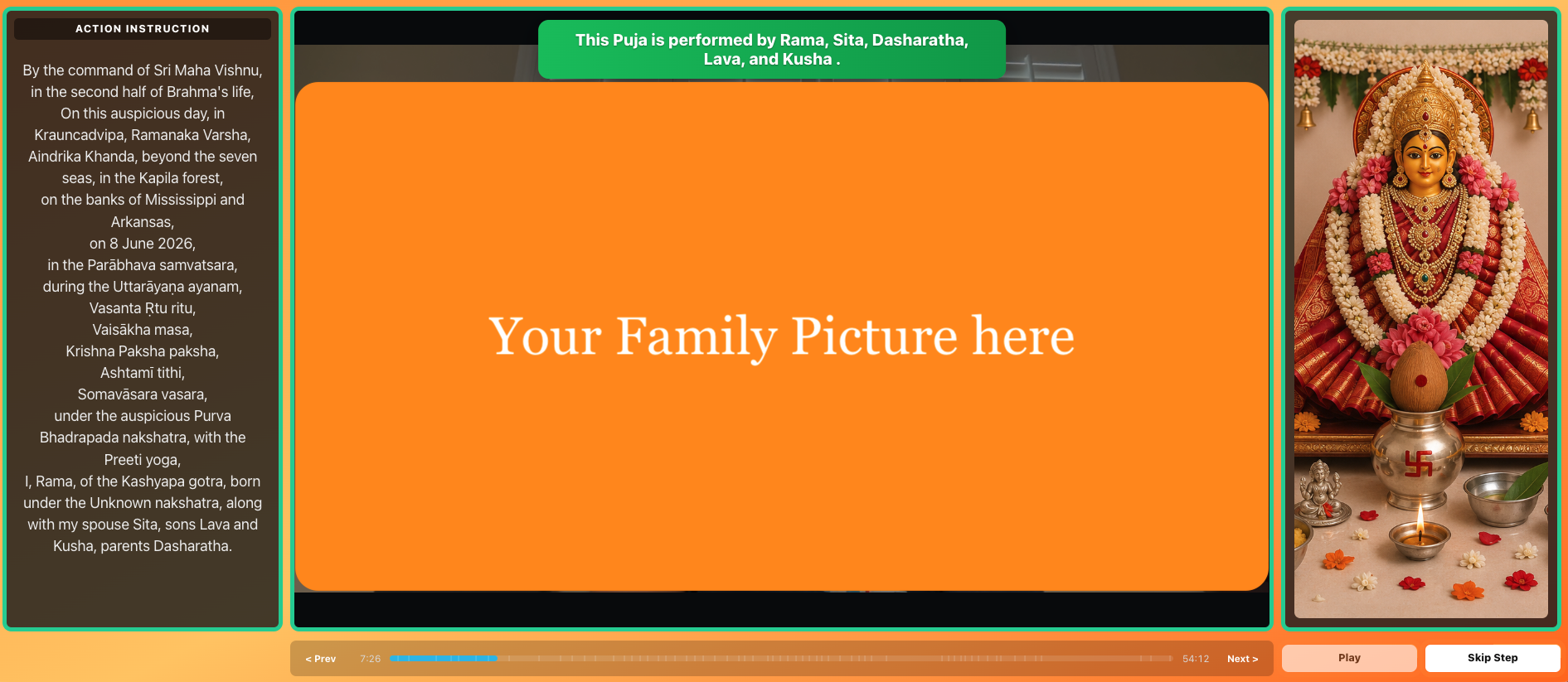
Your Sankalpa, Truly Yours
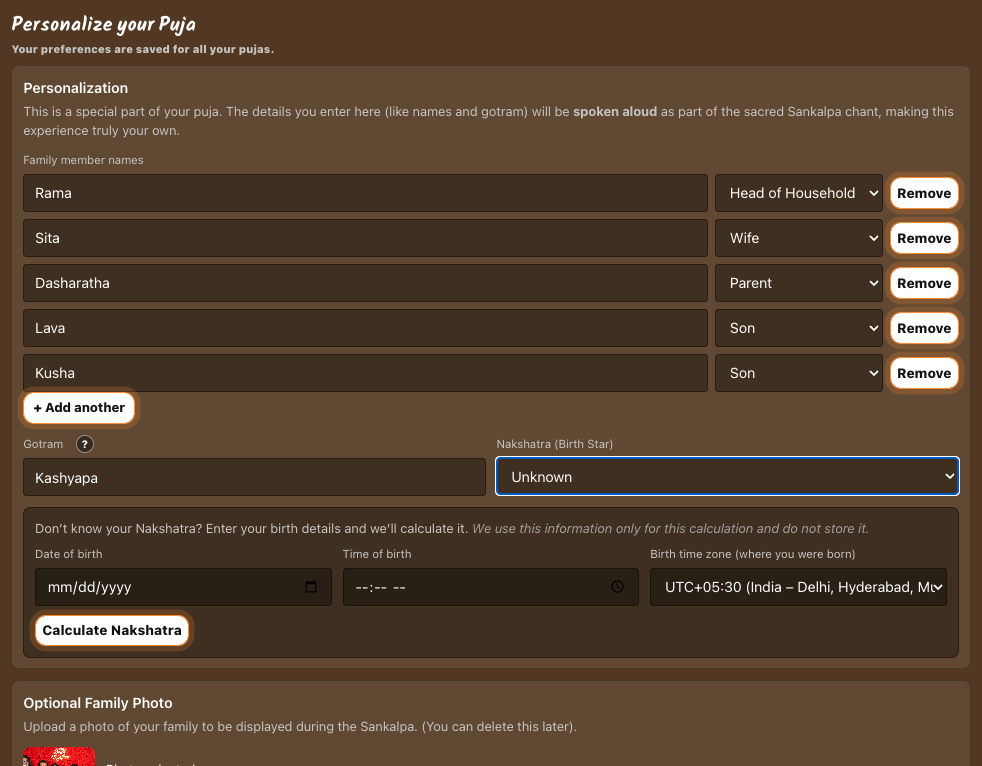
The Sankalpa — the sacred intention at the heart of every puja — is meant to be deeply personal. PujaZen speaks your family's names aloud in the Sanskrit chant, connects your location to its sacred rivers, and calculates your nakshatra. It's not a recording. It's your puja.
Guidance, Not Guesswork
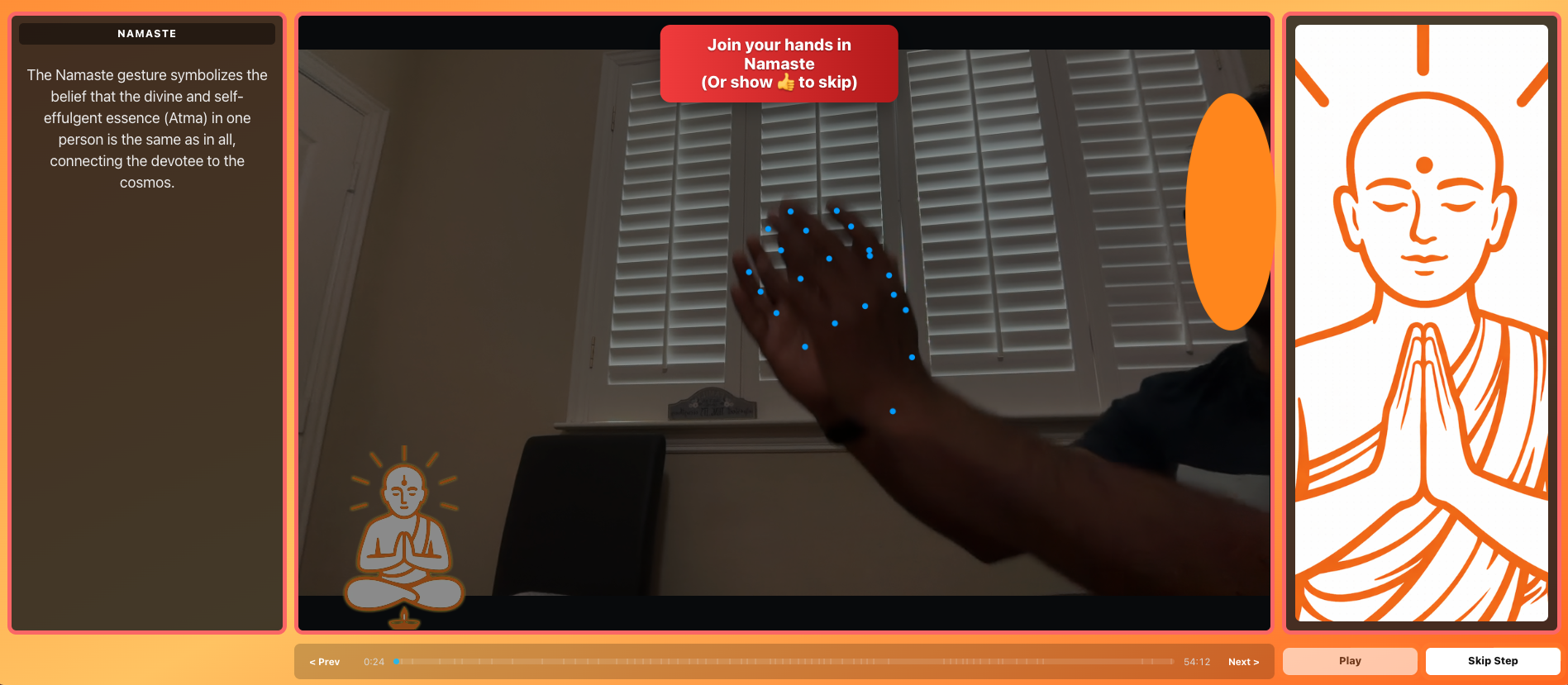
With AI and AR, PujaZen becomes your step-by-step guide — from setting up the altar to completing aarti. Real-time gesture recognition ensures nothing is missed, so you perform each ritual with clarity and confidence.
Book a Priest
Live Pujas with a Priest
Finding a priest is only one part of planning a puja. PujaZen handles the entire process — from discovery to booking to confirmed payment.

Find the right priest
Search by puja type, date, language, and location. See real qualifications and experience before you decide.

Request a time slot
Pick windows that work for you — the priest confirms one that fits their schedule. No back-and-forth phone calls.

Confirm and pay securely
Lock in your booking with full details and a payment record. Clear expectations on both sides before the puja.

Welcome your priest
Arrive prepared. Everything is confirmed, paid, and documented. Just open the door and begin.
पूजा — Puja
What is Puja?
The central act of Hindu worship — a structured ritual of reverence, gratitude, and devotion.
Puja (also spelled Pooja) is the central act of Hindu worship — a ritual offering of reverence, gratitude, and devotion to a deity. Rooted in the Vedic tradition, a complete puja involves sixteen sacred offerings known as the Shodashopachara: invoking the deity's presence, welcoming them as an honored guest with water, flowers, incense, food, and light.
Puja is performed in homes, temples, and during festivals — for everything from daily morning worship to significant life transitions like a new home, a child's first day of school, or a business launch.
For many Hindu families — especially those outside India — the rituals require knowledge passed down through generations, and that chain has frayed. PujaZen was built to close that gap.

Real-time guidance through every mantra, offering, and gesture
The experience
How PujaZen Works
From first-time setup to closing blessings — guided every step of the way.
Choose Your Puja
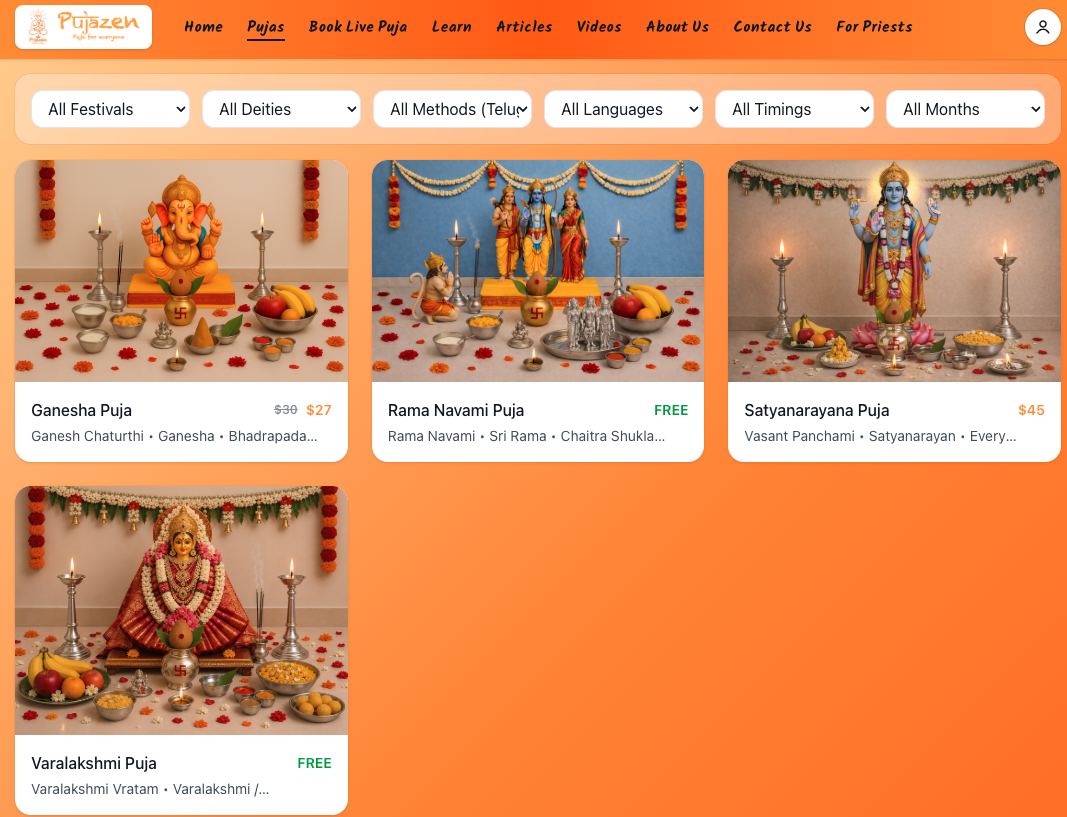
Browse our catalog of guided rituals — from daily Ganesha puja to festival ceremonies like Varalakshmi Vrat and Satyanarayana. Each puja includes a full materials list and personalization options before you begin.
Personalize & Gather Samagri
Enter your family names, gotram, and location — PujaZen weaves them into your Sankalpa chant. Then review your complete samagri list with quantities and preparation notes for every item.
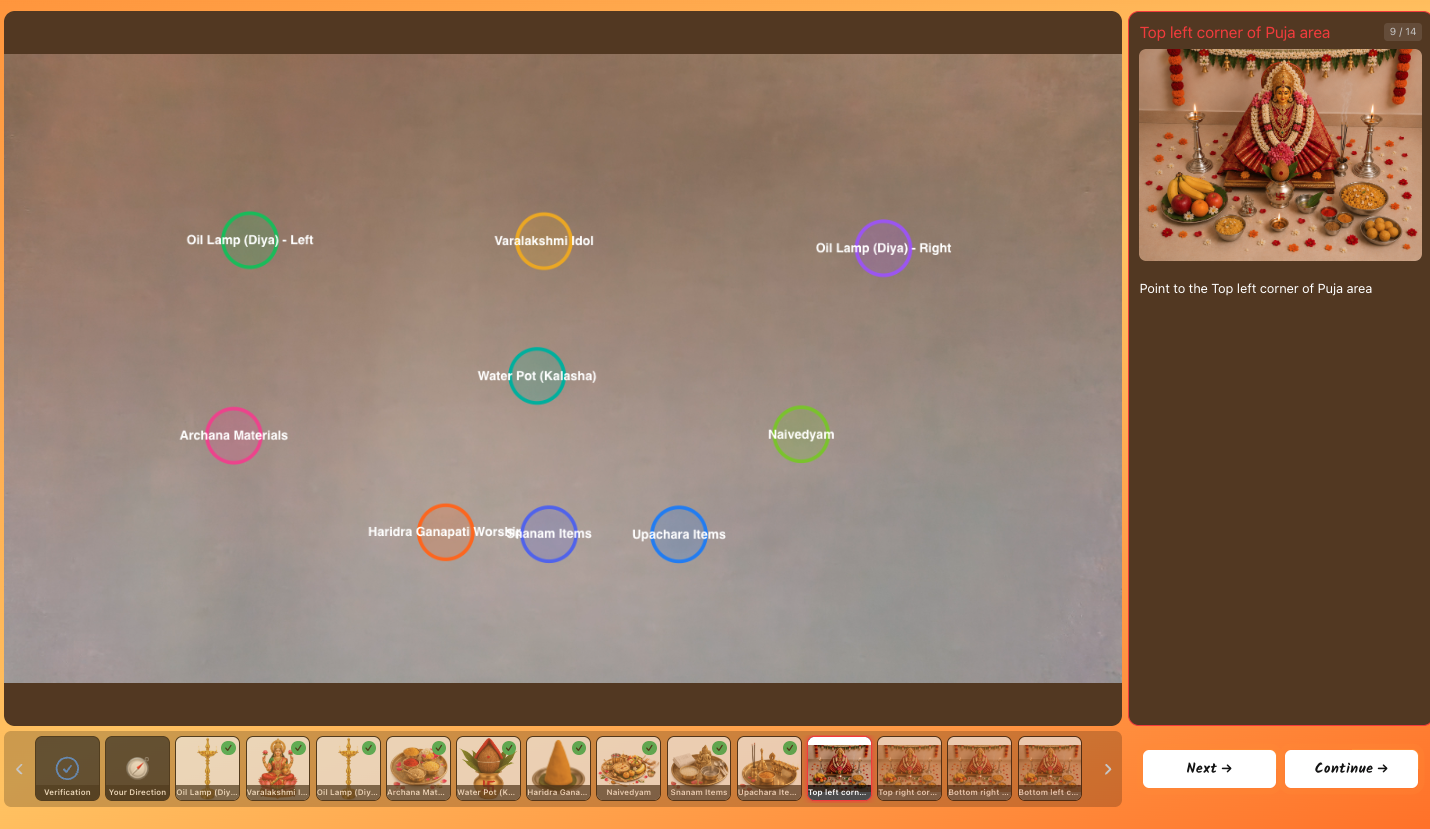
Set Up with AR Guidance
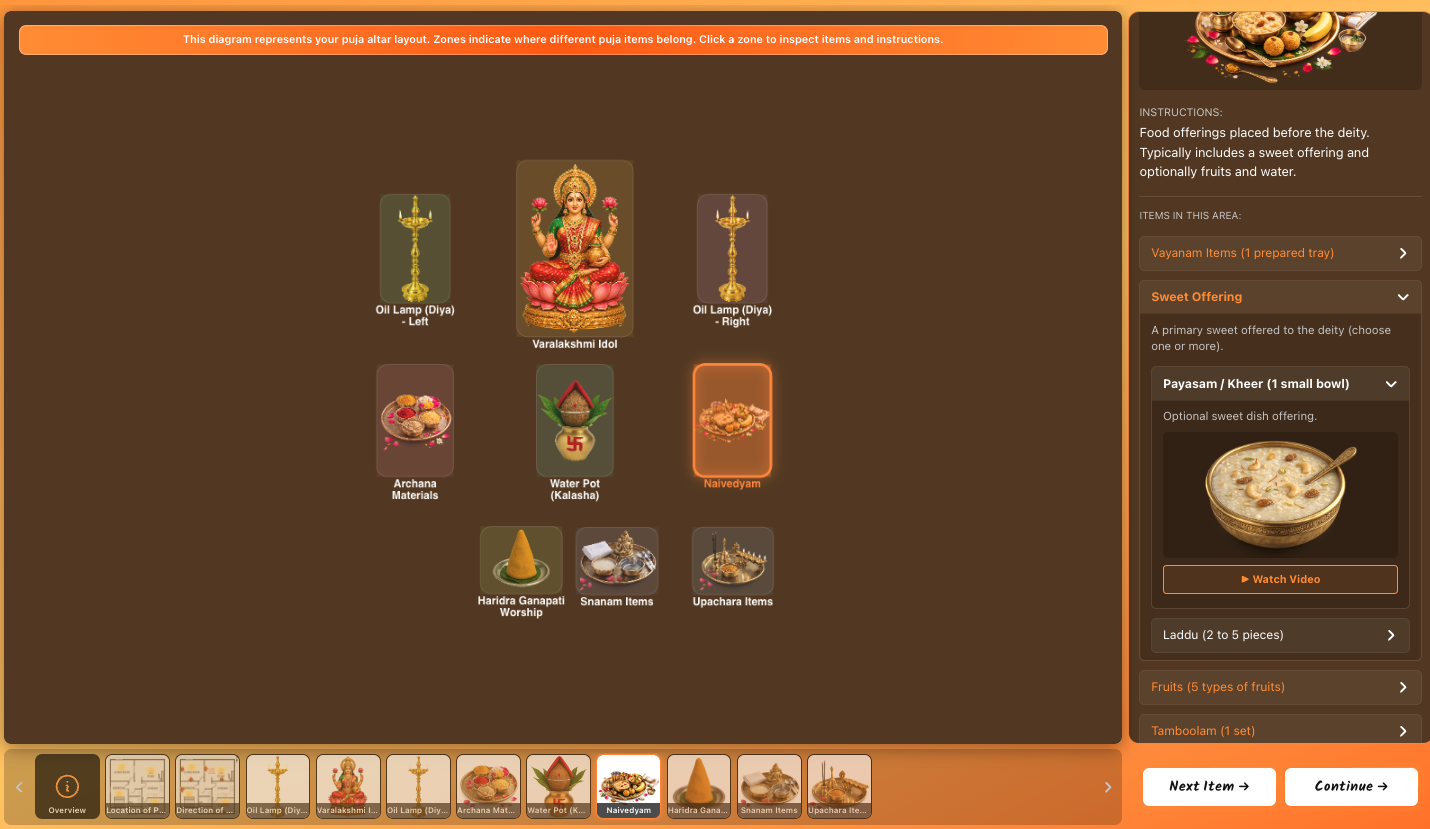
Our augmented reality altar overlay shows exactly where each item belongs — Ganesha idol, kalasha, lamps, and offerings — all mapped to your specific puja's requirements with real-time detection.
Follow Along, Step by Step
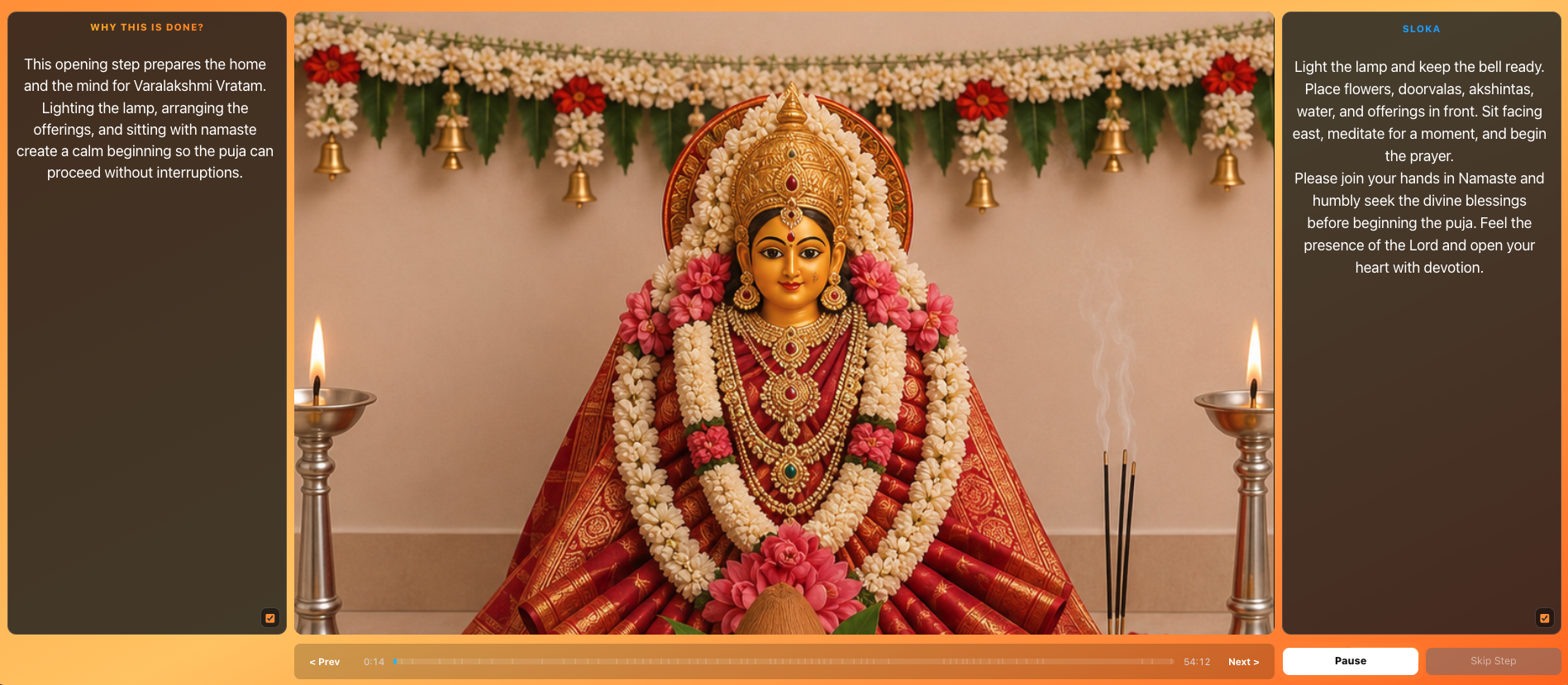
PujaZen guides you through every mantra, offering, and gesture — hands-free. Sanskrit phonetics, bilingual narration in Telugu and English, and contextual explanations keep you grounded throughout.
Features
What PujaZen Guides You Through
Every feature is designed to remove uncertainty from ritual practice.
Phonetic Mantra Guidance
Every Sanskrit mantra is transliterated into English phonetics and narrated at a comfortable pace. Follow along confidently without knowing Devanagari or Telugu script.
Samagri, Prep & Altar Setup
PujaZen guides the full pre-puja journey: a complete shopping list with quantities, prep work videos (how to make payasam, prepare turmeric rice), placement guidance showing exactly where each item belongs, and AR detection that validates your altar before you begin.
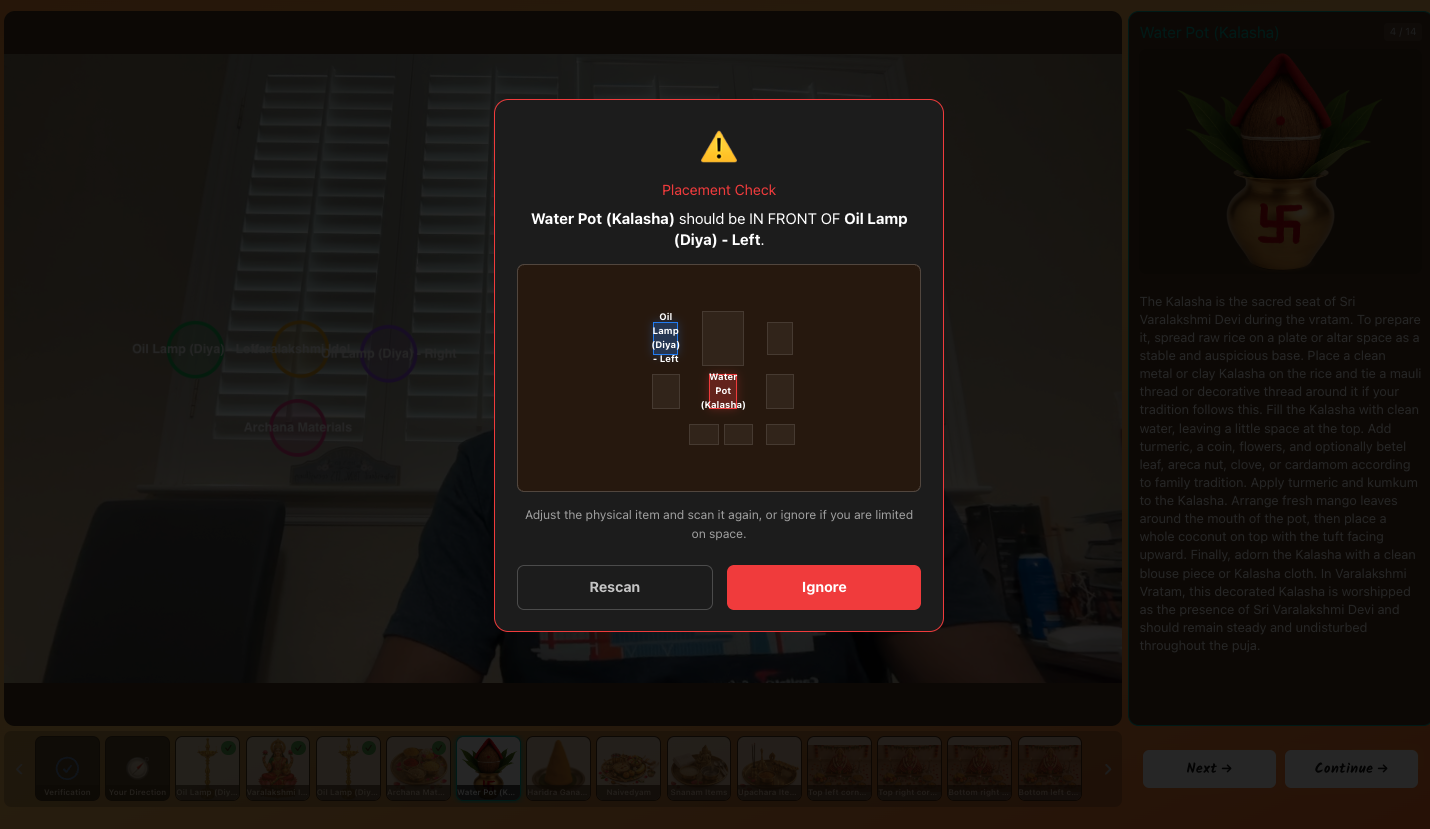
Real-Time Placement Checks
If an item is misplaced, PujaZen tells you exactly what's wrong and where it should go — before you proceed to the next step.
Gesture Recognition
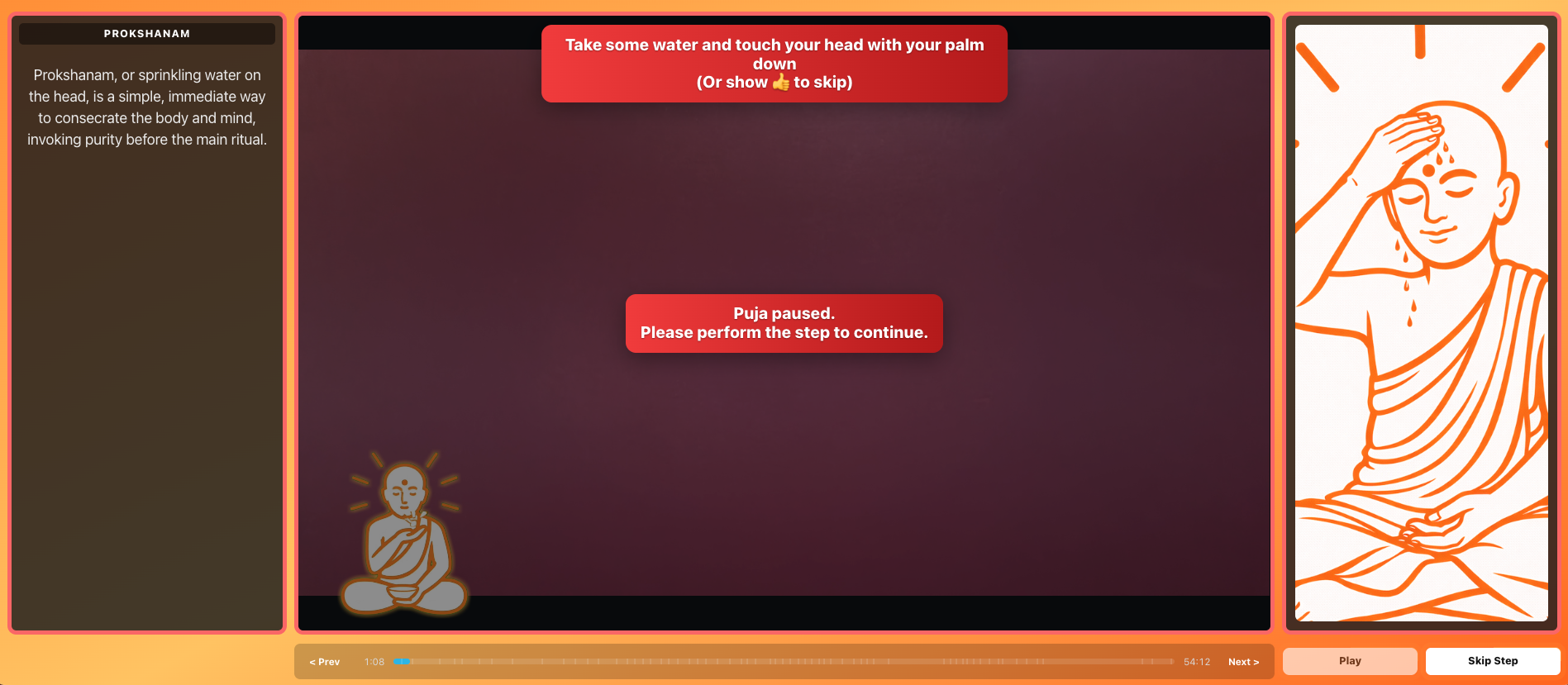
AI detects your ritual gestures — aarti, namaste, ringing a bell — in real time using your camera. Each action is verified before advancing.
Intelligent Auto-Pause
The puja pauses automatically when a gesture step is required, waiting for you to complete the action. Nothing is skipped or rushed.
Meaning Behind the Steps
Context cards explain the symbolism of each offering — why turmeric rice, what the kalasha represents, why Ganesha is always first. Puja becomes understanding, not just performance.
Complete Personalization
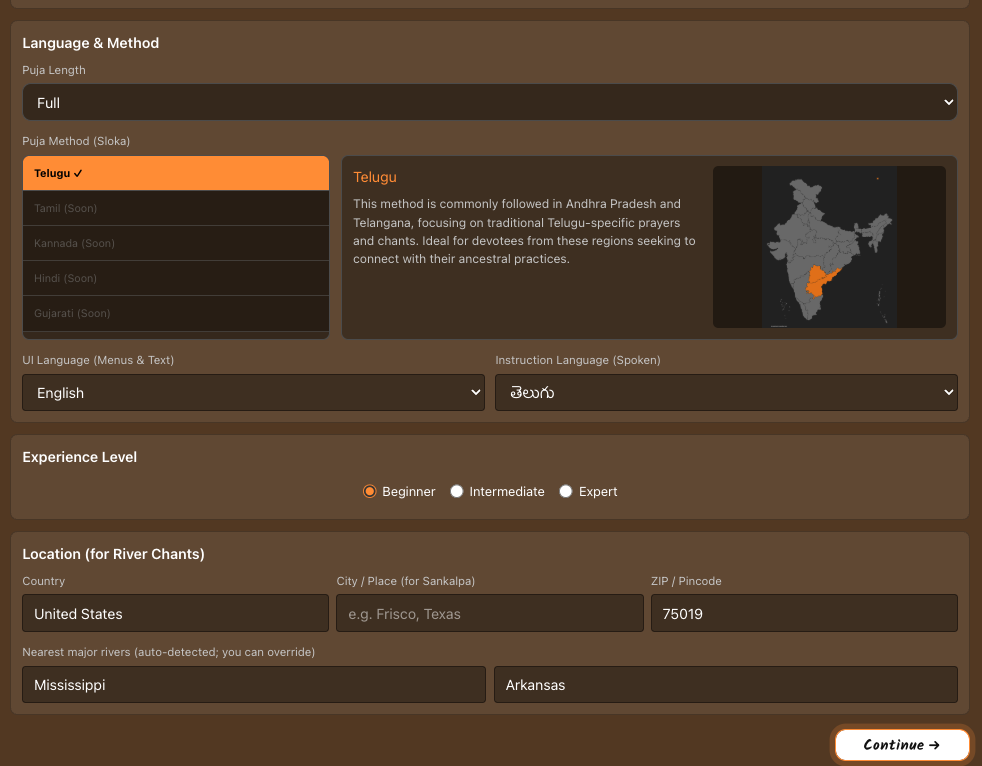
Don't know your nakshatra? PujaZen calculates it from your birth date and time. Your nearest sacred rivers are auto-detected from your ZIP code and woven into the Sankalpa. Choose language (Telugu, Tamil, Kannada), experience level, and puja length. Enter family names and gotram. Every detail spoken aloud — every puja uniquely yours.
Frequently Asked Questions
Everything you need to know before your first puja.