

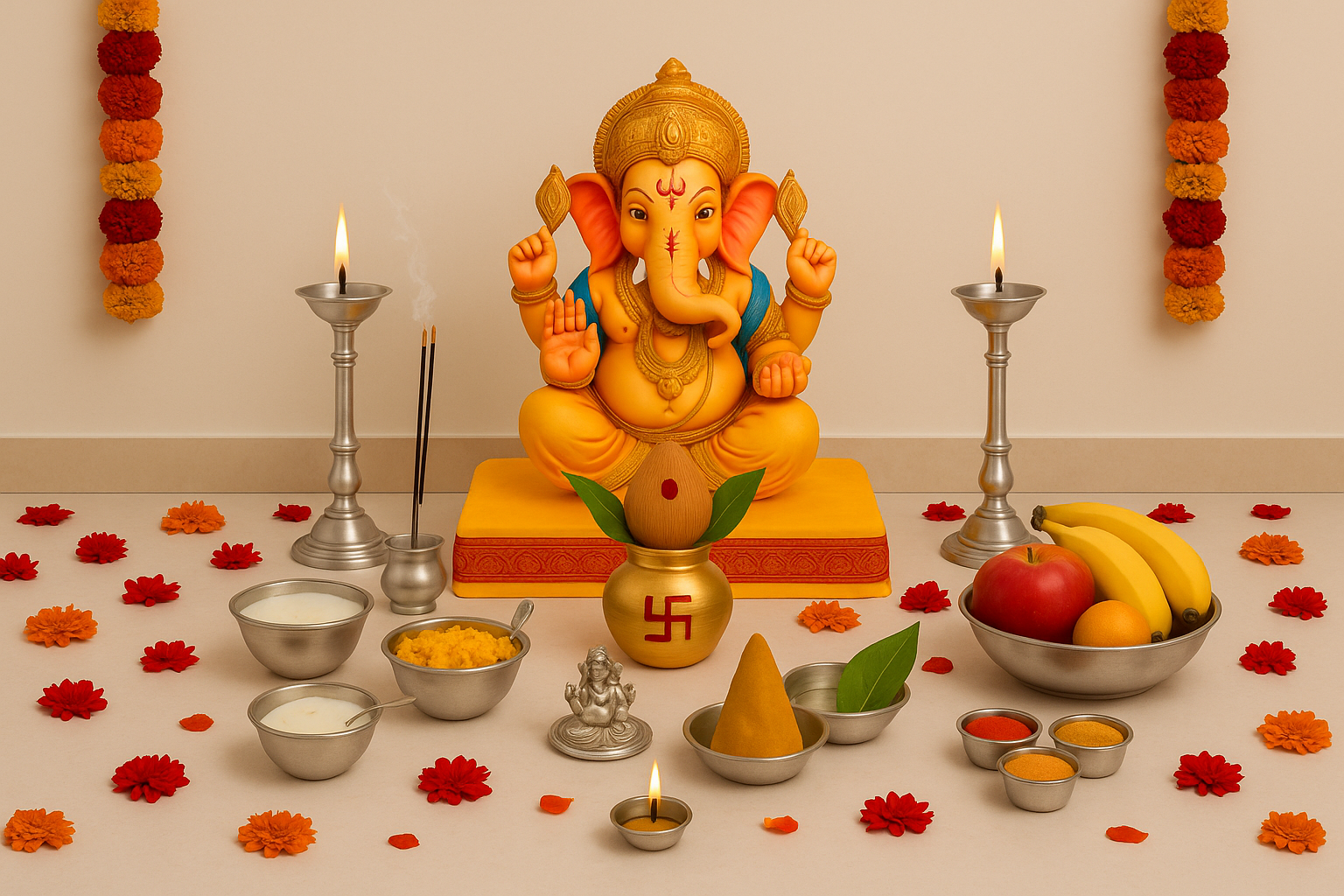
Ganesha Puja
Guided, step-by-step ritual with translations and AR setup assistance.
Pay it forward

Foundation For Excellence supports merit-cum-means scholarships for bright students in India who have the grades but not the means. Their programs include tuition support, mentoring, and skill-building workshops for engineering, medical, and law students. Since 1994, FFE has helped create more than 160,000 scholarships and a growing alumni network that often gives back to support the next generation.
Donations are processed directly by Foundation For Excellence.
Timing
Bhadrapada Shukla Chaturthi
Best Month
September
Puja Methods
Telugu, Vedic
Languages
Telugu, English
Why this Puja?
Lord Ganesha, revered as Vighneshwara (the remover of obstacles) and Mangal Murti (the bringer of auspiciousness), is always worshipped first before undertaking any spiritual, personal, or professional endeavor. A Ganesha Puja goes beyond ritual — it is a conscious invocation of clarity, grounding, and divine support for life’s journey. Scriptures describe Ganesha as the embodiment of Buddhi (wisdom), Siddhi (success), Shubha (auspicious beginnings), and Samruddhi (prosperity). By performing this puja, one aligns their intentions, calms the mind, and enters a state where inner and outer obstacles naturally dissolve.
When to Perform
Next Occurrence
Sep 4, 2027
Puja Time
11:05 AM – 1:37 PM
Ganesh Chaturthi — September
4th day (Chaturthi) of Bhadrapada Shukla Paksha; falls in September
Who Should Perform
Anyone can perform Ganesha Puja, regardless of age, background, or spiritual experience. It is beneficial for students seeking focus, professionals pursuing growth, and families wishing for harmony. Individuals going through challenges or emotional stress also experience grounding through this puja. Whether one is beginning something new with a simple puja or observing the full festival vratham with the traditional stories, the blessings of Lord Ganesha offer wisdom, courage, and divine auspiciousness.
What Makes This Puja Special
Distinctive ritual and devotional elements, and how they help the practicing devotee.
Patra, Pushpa, and Durva Offerings
This Ganesh Puja includes the traditional Ekavimshati offerings: twenty-one sacred leaves, twenty-one flowers, and twenty-one pairs of durva grass. The master text explains these offerings as a way of remembering Ganesha through many forms and qualities, while connecting devotion with nature, humility, gentleness, peace, and obstacle removal. For the devotee, the repeated offerings create focused surrender rather than a single symbolic prayer.
Ashtottara Nama Puja
The puja includes the recitation of one hundred and eight names of Lord Ganesha, with flowers or akshata offered name by name. Each name remembers a distinct quality of Ganesha: wisdom, auspicious beginnings, protection, success, and removal of obstacles. This helps the devotee move from simply asking for help into meditating on the divine qualities they wish to cultivate.
Vinayaka Vrata Katha
This puja includes four chapters of Vinayaka Vrata Katha, not just the offering sequence. The stories teach Ganesha's origin, His place as Ganadhipati, the importance of sincere observance, and the meaning of the Chavithi moon tradition through the Shamantaka episode. For the devotee, the katha turns the puja into a teaching on humility, discipline, remembrance, and freedom from false blame.
Purification Before Invocation
Before the main worship, the puja includes sharira shuddhi, achamanam, pranayama, bhootocchatana, kalasha puja, and prana pratishta. These steps prepare the body, speech, mind, space, water, and deity image before the offerings begin. For the devotee, this creates a gradual transition from ordinary household activity into a focused sacred space fit for worship.
What PujaZen Guides You Through
A complete ritual experience — from setup to closing blessings.
Prepare
- Materials & shopping list
- Altar layout with AR guidance
- Kalasha setup
Personalize
- Sankalpa — your personal intention
- Your name, family & occasion
- Personalized invocation
Purify
- Achamanam & Pranayama
- Prokshanam purification
- Kalasha Puja & Prana Pratishtha
Offer
- Guided Shodashopachara sequence
- Snanam, Gandham, Pushpam, Vastram
- Anga Puja, Patra Puja & Durva Puja
Complete
- Naivedyam & Tamboolam
- Aarti & Pradakshina
- Prasadam & closing blessings
Key Mantras
A sample of sacred verses from this puja — heard and chanted step by step inside PujaZen.
Introduction
Suklambaradharam Vishnu, Shashivarnam Chaturbhujam Prasanna Vadanaam Dhayaetsarva Vighnopasanthaye
🕉️ Why this sloka is recited: This sloka is chanted at the start of the puja to purify the mind and surroundings and invoke Lord Vishnu’s grace for an auspicious beginning. 📖 Key meanings: Shuklāmbaradharam — Clad in white, symbol of purity Vishnum — The all-pervading protector Prasanna Vadanam — Serene, smiling presence Sarva Vighnopaśāntaye — Removal of all obstacles ✨ This sloka invites peace, clarity, and a smooth start to the puja.
Used in: Recited during Introduction
Dhyanam
Dhyāyed gajānanaṃ devaṃ tapta-kāñcana-sannibham catur-bhujaṃ mahā-kāyaṃ sarvābharaṇa-bhūṣitam Om Śrī Vara-siddhi Vināyaka svāmine namaḥ dhyāyāmi
This meditation verse guides the devotee to contemplate Lord Ganesha’s radiant golden form, with four arms and adorned with divine ornaments. By visualizing this auspicious form, the mind becomes steady and the presence of the deity is firmly established within the heart.
Used in: Recited during Dhyanam
Yajnopavitam
Om rājataṃ, brahma-sūtraṃ ca kāñcanaṃ cottarīyakam gṛhāṇa deva sarvajña bhaktānām iṣṭa-dāyaka Om Śrī Vara-siddhi Vināyaka svāmine namaḥ, yajnopavītaṃ samarpayāmi
In this yajnopavita offering mantra, the devotee presents the sacred brahma-sūtra, envisioned as pure and auspicious, associated with silver and golden radiance. Addressing Lord Vinayaka as the all-knowing deity who fulfills the wishes of devotees, the prayer seeks His gracious acceptance of the sacred thread. Through this offering, the devotee renews a commitment to live by dharma, knowledge, and disciplined conduct, strengthening the spiritual bond between the worshipper and the divine.
Used in: Recited during Yajnopavitam
Naivedyam
Om sugandhān sukṛtāṁścaiva modakān ghṛta pācitān Naivedyaṁ gṛhyatāṁ deva caṇamudgaiḥ prakalpitān Bhakṣyaṁ bhojyaṁ ca lehyaṁ ca coṣyaṁ pānīyam eva ca Idaṁ gṛhāṇa naivedyaṁ mayā dattaṁ vināyaka
In this mantra, the food offered as naivedyam is described as fragrant and prepared with devotion. Modakas, ghee-cooked items, and foods made from grains are lovingly presented to Lord Ganesha. By offering all forms of nourishment—solid food, cooked meals, lickables, chewables, and drinks—the devotee symbolically dedicates the entirety of life’s sustenance to the deity. Through this offering, one acknowledges all effort and prosperity as divine grace and transforms nourishment itself into sacred service.
Used in: Recited during Naivedyam
Udvasana
Yajñena yajñamayajanta devāḥ Tāni dharmāṇi prathamānyāsan Te ha nākaṁ mahimānaḥ sacante Yatra pūrve sādhyaḥ santi devāḥ
Reciting these mantras during Udvasana marks the scriptural completion of the puja. The Rigvedic hymn affirms that the worship has been offered in alignment with dharma and cosmic order. The phrase “Asmin bimbe pratiṣṭhitam” formally conveys that the deity invoked and established in this form is being respectfully returned to His divine abode, reinforcing the idea of the deity as an honored divine guest. The Sankata-nāśana Gaṇeśa Stotra recalls the twelve sacred names of Lord Ganesha, described in the Narada Purana as bestowers of obstacle-removal, knowledge, prosperity, progeny, and liberation. By chanting this stotra at the time of Udvasana, the devotee ensures that the spiritual fruits of the puja remain enduring. The ritual concludes with gratitude, balance, and inner peace.
Used in: Recited during Udvasana