

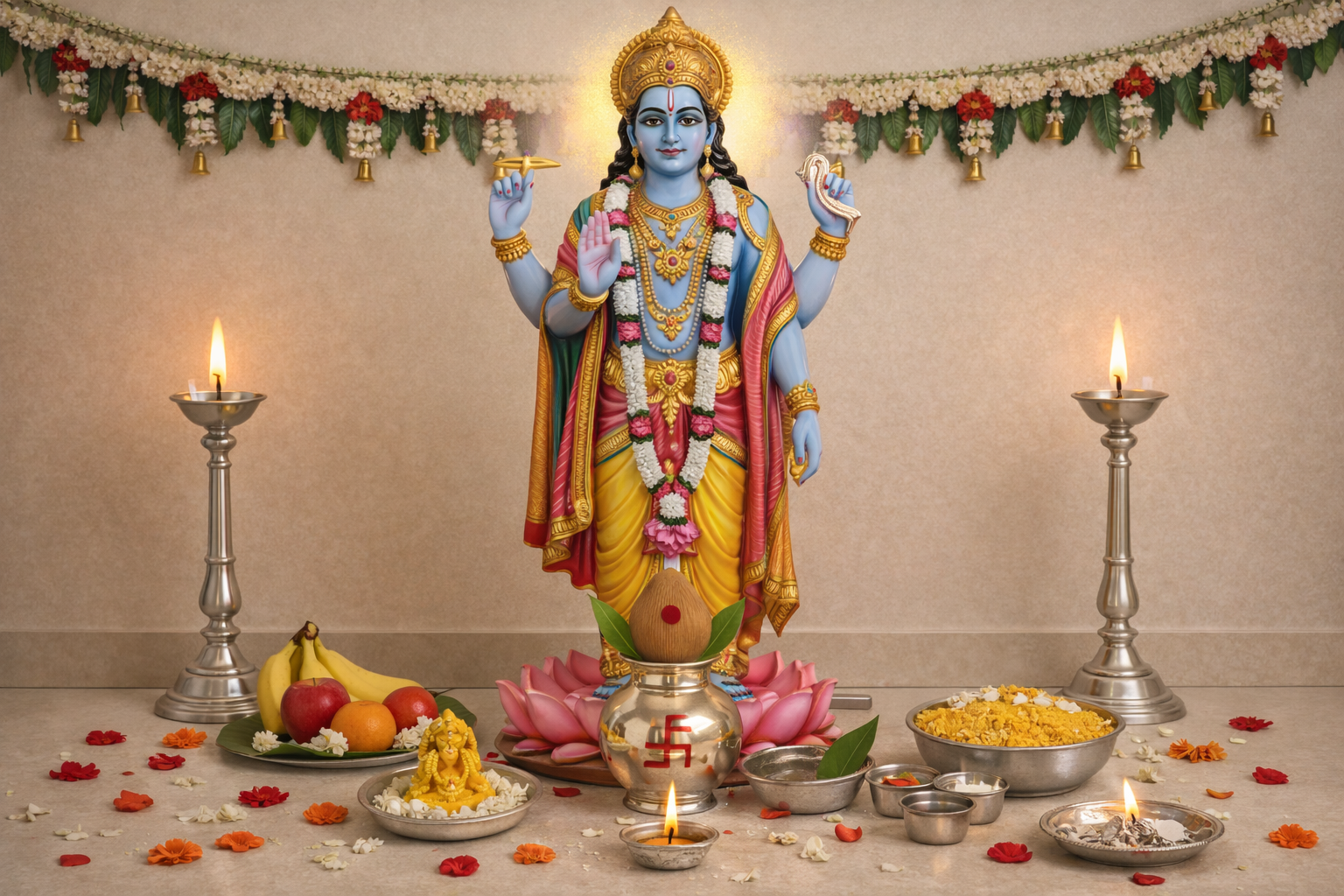
Satyanarayana Puja
Guided, step-by-step ritual with translations and AR setup assistance.
Timing
Every Purnima
Best Month
Any
Puja Methods
Telugu, Vedic
Languages
English, Telugu
Why this Puja?
Lord Satyanarayana represents the sustaining power of truth, righteousness, and divine grace. The Satyanarayana Vrat is performed to seek protection from difficulties, fulfillment of sincere wishes, and overall well-being. The sacred katha teaches that devotion combined with sincerity removes sorrow, restores balance, and invites prosperity. Beyond ritual, this vrat aligns one’s life with Satya (truth), gratitude, and humility — dissolving karmic obstacles and nurturing peace, abundance, and spiritual growth.
When to Perform
Performed on any full moon or auspicious occasion
Not tied to a specific festival date; traditionally performed on Purnima (full moon) days or life milestones
Who Should Perform
Anyone can perform the Satyanarayana Vrat, individually or as a family. It is especially beneficial for households seeking harmony, couples praying for children, individuals desiring success in career or business, and devotees wishing to overcome obstacles and past difficulties. Those beginning a new chapter in life or seeking inner peace and stability also find strength in this vrat. Through sincere observance and katha listening, devotees receive both worldly prosperity and spiritual elevation.
What Makes This Puja Special
Distinctive ritual and devotional elements, and how they help the practicing devotee.
Five-Chapter Satyanarayana Katha
The vratam includes five chapters of Satyanarayana Katha, making the story an essential part of the worship rather than an optional add-on. The chapters teach that truth, gratitude, humility, keeping one's vow, honoring prasadam, and remembering the Lord in prosperity and distress all shape the devotee's life. Listening with akshata in hand makes the teaching participatory, not merely narrative.
Truth-Centered Vrata Sankalpa
Satyanarayana worship centers the devotee on Satya, the principle of truth upheld by Lord Vishnu. The sankalpa, offerings, katha, and prasadam together turn the puja into a vow to live with sincerity, gratitude, and dharmic responsibility. For families, this makes the ritual meaningful during milestones, fulfilled wishes, recovery from hardship, and monthly thanksgiving.
Expanded Protective Puja Structure
The master text includes Ganapati worship, Kalasha Puja, Shankha Puja, Varuna Puja, Navagraha Puja, Dikpalaka worship, and then the main Satyanarayana Shodashopachara. This broader structure surrounds the vratam with purification, direction-protection, planetary harmony, and Vishnu-centered devotion. For the devotee, it frames the home and family within an ordered sacred cosmos before the katha begins.
Ashtottara and Prasadam Discipline
The puja includes one hundred and eight names of Satyanarayana Swami followed by naivedyam, tamboolam, aarti, and the repeated offering of akshata at the end of each katha chapter. The stories especially emphasize honoring prasadam with humility. This helps the devotee internalize that divine grace should be received with respect, not treated casually after the ritual is complete.
What PujaZen Guides You Through
A complete ritual experience — from setup to closing blessings.
Prepare
- Materials & shopping list
- Altar layout with AR guidance
- Kalasha setup
Personalize
- Sankalpa — your personal intention
- Your name, family & occasion
- Personalized invocation
Purify
- Achamanam & Pranayama
- Prokshanam purification
- Kalasha Puja & Prana Pratishtha
Offer
- Guided Shodashopachara sequence
- Snanam, Gandham, Pushpam, Vastram
- Anga Puja, Patra Puja & Durva Puja
Complete
- Naivedyam & Tamboolam
- Aarti & Pradakshina
- Prasadam & closing blessings
Key Mantras
A sample of sacred verses from this puja — heard and chanted step by step inside PujaZen.
Sharira Shuddhi
Om apavitraḥ pavitro vā sarvāvasthāṁ gato'pi vā, yaḥ smaret puṇḍarīkākṣaṁ sa bāhyābhyantara śuciḥ. Puṇḍarīkākṣa! Puṇḍarīkākṣa! Puṇḍarīkākṣāya namaḥ.
This verse reminds us that regardless of our state, remembrance of the Lord grants both inner and outer purity. By invoking Pundarikaksha (the lotus-eyed Lord), we cleanse body and mind and prepare ourselves for worship.
Used in: Recited during Sharira Shuddhi
Ganapati Deepam
Sājyaṁ trivarti saṁyuktaṁ vahninā yojitaṁ priyam Gṛhāṇa maṅgalaṁ dīpaṁ trailokya timirāpaha Bhaktyā dīpaṁ prayacchāmi devāya paramātmane Trāhimāṁ narakād ghorāt divya jyotir namo'stu te
In this hymn, we offer the auspicious lamp and remember the divine light that dispels darkness across the three worlds. With devotion, we pray for protection and spiritual illumination. After offering the lamp, we present achamaniya and continue the worship.
Used in: Recited during Ganapati Deepam
Indra Dikpalaka
Om Indram Vo Vishvataspari Havaamahe Janebhyah Asmaakam Astu Kevalah Saangam Saayudham Savaahanam Sashaktim Patnee Putra Parivaara Sametam
This mantra invokes Indra as the protector of all beings. He symbolizes divine strength, the power of the thunderbolt, and victory. In the eastern direction, we seek his blessings for courage, protection, and success.
Used in: Recited during Indra Dikpalaka
Satyanarayana Vastram
Saptasyaasan Paridhayah Trih Sapta Samidhah Kritah Devaa Yadhyajnam Tanvanaah Abadhnan Purusham Pashum
This verse signifies offering clothing to the Lord as an expression of devotion, respect, and care in worship. The offering symbolizes the deity’s beauty, majesty, and sanctity.
Used in: Recited during Satyanarayana Vastram
Kalasha Udvasana
Yajnena Yajnam Ayajanta Devaah Taani Dharmaani Prathamaanyasan Te Ha Naakam Mahimaanah Sachante Yatra Poorve Saadhyaah Santi Devaah
This verse is recited during the Kalasha Udvasana. It respectfully requests the invoked deities to return to their rightful abodes, marking the proper completion of the ritual. The prayer seeks righteousness, protection, and auspiciousness for all. It concludes with a peace invocation for universal well-being.
Used in: Recited during Kalasha Udvasana