

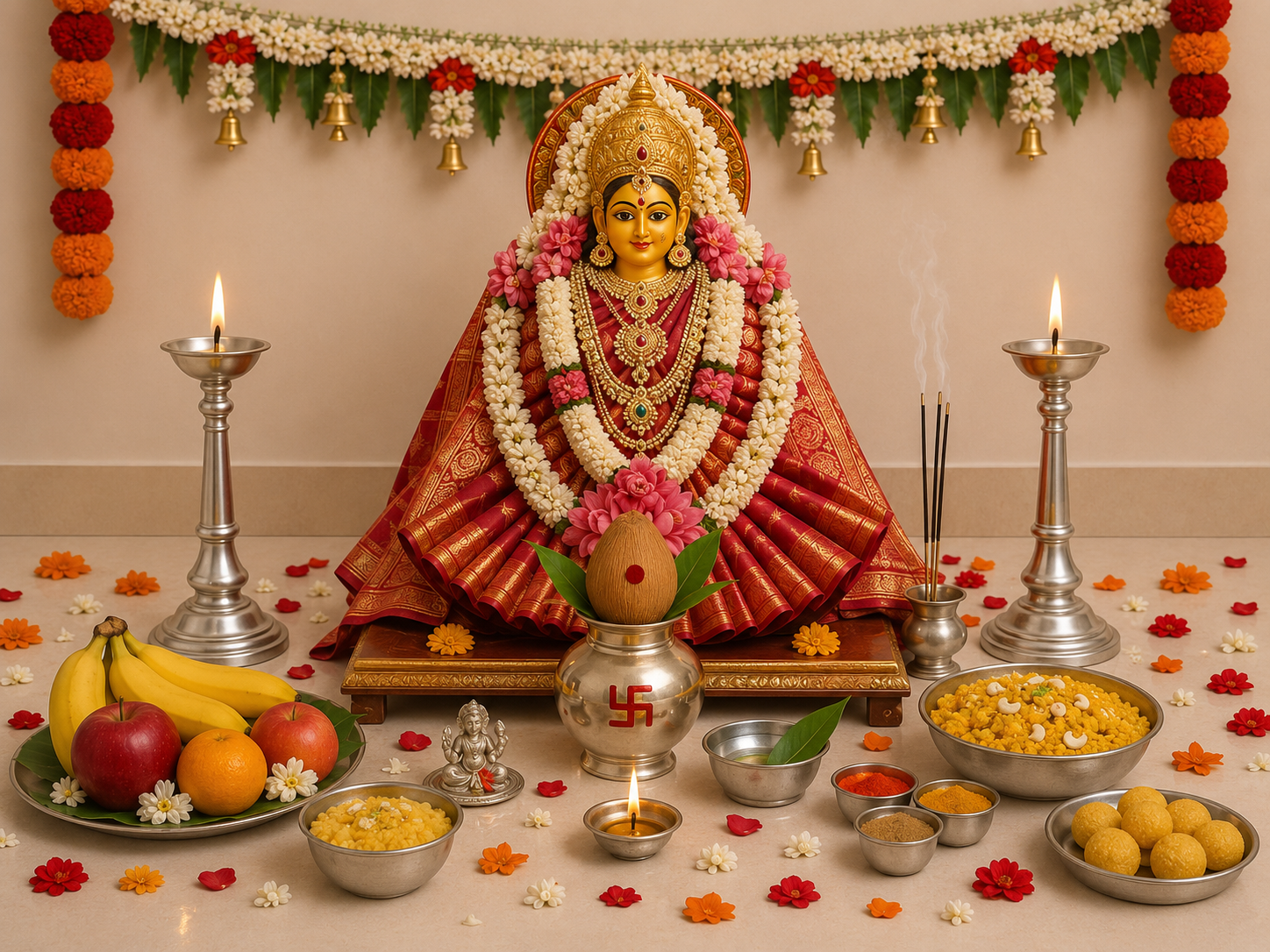
Varalakshmi Puja
Guided, step-by-step ritual with translations and AR setup assistance.
Pay it forward

Foundation For Excellence supports merit-cum-means scholarships for bright students in India who have the grades but not the means. Their programs include tuition support, mentoring, and skill-building workshops for engineering, medical, and law students. Since 1994, FFE has helped create more than 160,000 scholarships and a growing alumni network that often gives back to support the next generation.
Donations are processed directly by Foundation For Excellence.
Timing
Last Friday of Shravana Shukla Paksha (on or just before Purnima ends)
Best Month
Shravana / Sravana (Jul-Aug)
Puja Methods
Telugu, Vedic
Languages
English, Telugu
Why this Puja?
Sri Varalakshmi Devi is worshipped as the giver of vara — sacred blessings — especially prosperity, family welfare, auspiciousness, health, and protection. Varalakshmi Vratam is not only a request for material well-being; it is a disciplined expression of gratitude, household harmony, and devotion to the sustaining grace of Lakshmi. Through sankalpa, kalasha worship, upacharas, toram, vayanam, katha, and prasadam, the devotee invites the Goddess into the home and prays that prosperity remain guided by dharma, humility, and generosity.
When to Perform
Next Occurrence
Aug 13, 2027
Auspicious Times
Simha: 6:05 AM–8:23 AM · Vrishchika: 12:58 PM–3:17 PM · Kumbha: 7:05 PM–8:33 PM · Vrishabha: 11:33 PM–1:27 AM
Varalakshmi Vratam — August
Last Friday of Shravana Shukla Paksha — the Friday on or just before Purnima ends; falls in July or August, predominantly August
Who Should Perform
Anyone may participate in Varalakshmi Vratam with devotion. It is traditionally observed by married women in many households, but families often perform and listen together. The puja is especially meaningful for devotees seeking household prosperity, harmony, health, and auspicious continuity across generations.
What Makes This Puja Special
Distinctive ritual and devotional elements, and how they help the practicing devotee.
Varalakshmi Kalasha Alankaram
Varalakshmi Vratam gives special importance to the kalasha as the living seat of Devi's grace, often adorned with coconut, leaves, cloth, ornaments, and the Varalakshmi face or mukham. This transforms the home altar into a symbol of auspicious presence, nourishment, and household prosperity. For the devotee, preparing and worshipping the kalasha becomes an act of inviting Lakshmi into the family with care and reverence.
Toram and Mangalyam Worship
The vratam includes Varalakshmi toram and mangalyam-related offerings, which are not part of a generic daily Lakshmi puja. These elements connect the worship to family welfare, marital auspiciousness, protection, and the continuity of blessings across the household. For the practicing devotee, they make the vrata personal and relational, linking prosperity with responsibility, harmony, and prayer for loved ones.
Vayanam and Shared Abundance
Vayanam is a distinctive Varalakshmi Vratam practice in which offerings are prepared and shared in a spirit of gratitude and auspicious exchange. It reminds the devotee that Lakshmi's blessings are not only received privately but honored through generosity, hospitality, and community. This helps keep the prayer for prosperity grounded in dharma, humility, and the sharing of good fortune.
Vrata Katha and Household Dharma
The Varalakshmi vrata is traditionally completed with katha, prasadam, and closing blessings, so the ritual teaches as well as blesses. The story dimension helps devotees remember that prosperity is sustained through devotion, discipline, gratitude, and right conduct. For families, this makes the puja a yearly renewal of household values rather than only a request for wealth.
What PujaZen Guides You Through
A complete ritual experience — from setup to closing blessings.
Prepare
- Materials & shopping list
- Altar layout with AR guidance
- Kalasha setup
Personalize
- Sankalpa — your personal intention
- Your name, family & occasion
- Personalized invocation
Purify
- Achamanam & Pranayama
- Prokshanam purification
- Kalasha Puja & Prana Pratishtha
Offer
- Guided Shodashopachara sequence
- Snanam, Gandham, Pushpam, Vastram
- Anga Puja, Patra Puja & Durva Puja
Complete
- Naivedyam & Tamboolam
- Aarti & Pradakshina
- Prasadam & closing blessings
Key Mantras
A sample of sacred verses from this puja — heard and chanted step by step inside PujaZen.
Introduction
pūrvāṃgaṃ śrīmahāgaṇādhipatayē namaḥ śrī gurubhyō namaḥ hariḥ ōṃ
The mangala words mark the sacred start of the ritual. Remembering Ganesha, the Guru, and Hari places the vratam under divine guidance before the detailed worship begins.
Used in: Recited during Introduction
Ganapati Vastram
abhi vastrā suvasanānyarṣābhi dhēnūḥ sudughāḥ pūyamānaḥ abhi caṃdrā bhartavē nō hiraṇyābhyaśvānrathinō dēva sōma ōṃ mahāgaṇapatayē namaḥ vastraṃ samarpayāmi
In this verse, we offer auspicious garments to the deity as a mark of honor and adornment. By presenting clothing, we express reverence and enhance the sanctity and beauty of the worship.
Used in: Recited during Ganapati Vastram
Varalakshmi Dhyanam
padmāsanē padmakarē sarvalōkaika pūjitē nārāyaṇapriyē dēvi suprītā bhava sarvadā kṣīrōdārṇava saṃbhūtē kamalē kamalālayē susthirā bhava mē gēhē surāsura namaskṛtē
The dhyana verse visualizes Varalakshmi as the giver of prosperity, auspiciousness, and protection. It helps the devotee hold her form steadily in the mind before offering the upacharas.
Used in: Recited during Varalakshmi Dhyanam
Lakshmi Ashtottara Shatanamavali
śrī lakṣmī aṣṭōttara śatanāmāvaḷiḥ ōṃ prakṛtyai namaḥ ōṃ vikṛtyai namaḥ ōṃ vidyāyai namaḥ
Chanting these 108 names with flowers or akshata deepens devotion and invites the many forms of Lakshmi’s blessings into the home.
Used in: Recited during Lakshmi Ashtottara Shatanamavali
Varalakshmi Udvasanam Optional
ōṃ śrī varalakṣmī dēvatāyai namaḥ yathāsthānaṃ udvāsayāmi śōbhanārthē kṣēmāya punarāgamanāya ca ōṃ śāṃtiḥ śāṃtiḥ śāṃtiḥ
This mantra gently concludes the invoked presence and returns the worship to everyday life while preserving the blessing of the Goddess.
Used in: Recited during Varalakshmi Udvasanam Optional