

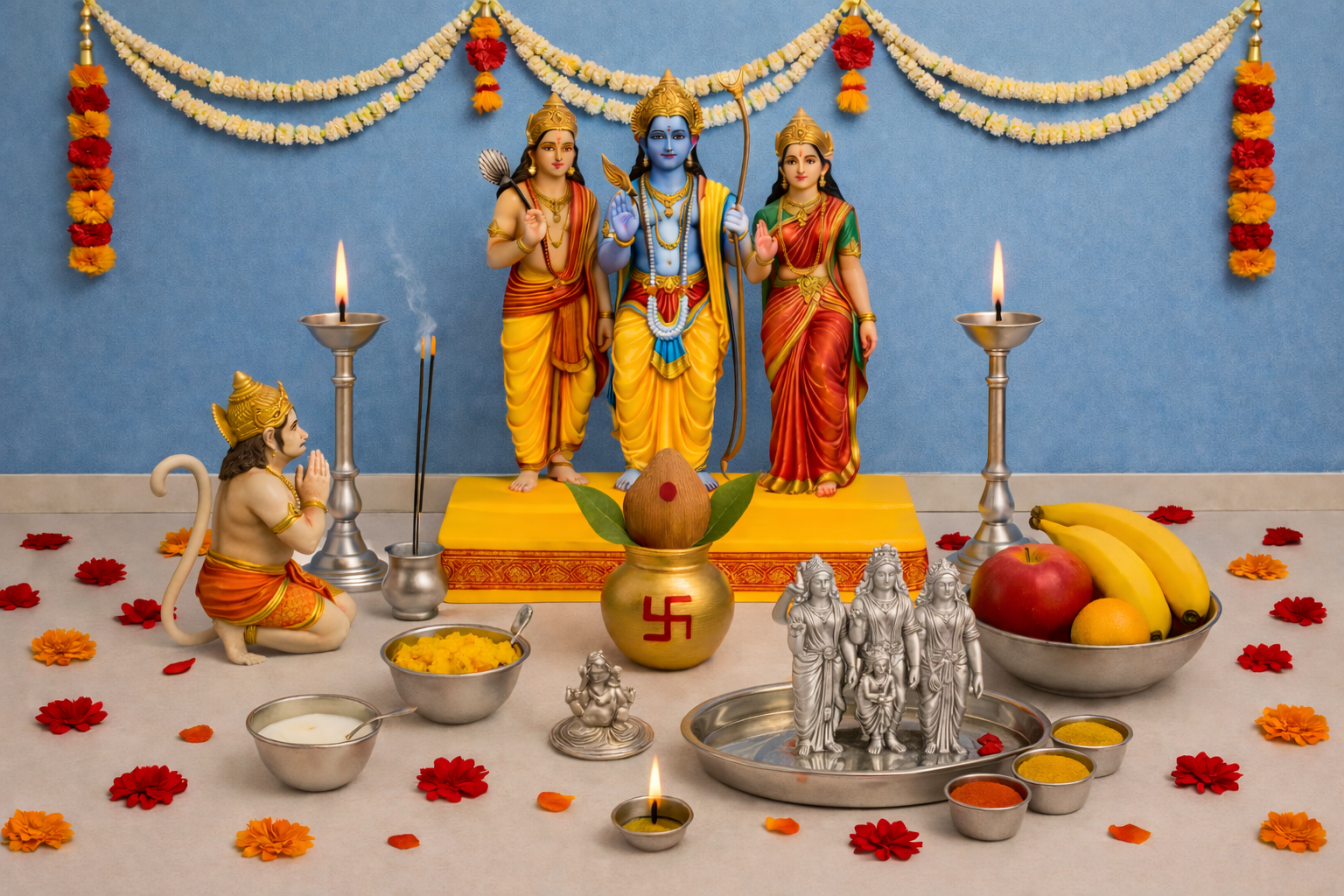
Rama Navami Puja
Guided, step-by-step ritual with translations and AR setup assistance.
Pay it forward

Foundation For Excellence supports merit-cum-means scholarships for bright students in India who have the grades but not the means. Their programs include tuition support, mentoring, and skill-building workshops for engineering, medical, and law students. Since 1994, FFE has helped create more than 160,000 scholarships and a growing alumni network that often gives back to support the next generation.
Donations are processed directly by Foundation For Excellence.
Timing
Chaitra Shukla Navami
Best Month
Chaitra
Puja Methods
Telugu, Vedic
Languages
English, Telugu
Why this Puja?
Lord Sri Rama is revered as Maryada Purushottama — the supreme exemplar of righteousness, truth, discipline, compassion, and ideal conduct. Rama Navami is observed to honor his divine birth and to invite his blessings into one’s life and home. Worshipping Sri Rama helps cultivate dharma, inner strength, humility, devotion, and steadiness during life’s challenges. This puja is especially cherished for bringing peace, protection, harmony in the family, moral clarity, and spiritual merit. By remembering Sri Rama, devotees align themselves with righteous living and receive divine grace for both worldly well-being and inner growth.
When to Perform
Next Occurrence
Apr 15, 2027
Puja Time
11:05 AM – 1:39 PM
Sri Rama Navami — March / April
9th day (Navami) of Chaitra Shukla Paksha; falls in late March or April
Who Should Perform
Anyone can perform Rama Navami puja, individually or together as a family. It is especially beneficial for devotees seeking righteous living, family harmony, courage in adversity, protection from difficulties, and devotion to Sri Rama. Parents often perform it for the well-being and values of their children, couples for household unity, and individuals for moral clarity, peace of mind, and spiritual strength. Those beginning a new phase of life or wishing to deepen their connection to Rama, Sita, Lakshmana, and Hanuman also find this puja deeply meaningful and uplifting.
What Makes This Puja Special
Distinctive ritual and devotional elements, and how they help the practicing devotee.
Sri Rama Janma Worship
Rama Navami is centered on the divine birth of Sri Rama, revered as Maryada Purushottama, the ideal of dharma, truth, compassion, restraint, and righteous conduct. The puja helps devotees contemplate Rama not only as a deity to worship, but as a model for living with steadiness, humility, courage, and moral clarity in family and public life.
Sita-Rama-Lakshmana-Hanuman Devotion
The altar and dhyana focus on Sri Rama together with Sita, Lakshmana, and Hanuman, so the worship is not isolated from relationship and service. Sita represents grace and steadfastness, Lakshmana represents disciplined support, and Hanuman represents devotion in action. For the devotee, this makes the puja a prayer for family harmony, loyalty, protection, and service rooted in dharma.
Rama Ashtottara and Anga Puja
The master text includes Sri Rama Anga Puja and Ashtottara Puja, allowing devotees to worship the Lord's form and one hundred and eight names with attention. Each name and body-offering turns remembrance into meditation on Rama's virtues. This helps devotees move beyond festival celebration into personal reflection on righteousness, compassion, protection, and inner discipline.
Festival Offering and Closing Blessings
Rama Navami worship traditionally includes naivedyam, neerajanam, mantrapushpam, pradakshina, sashtanga namaskaram, kshamaprarthana, mangalam, phalam, and tirtham. These closing sections help the devotee receive the puja as blessing, not merely complete it as a checklist. The ritual ends by asking forgiveness, offering surrender, and carrying Rama's dharmic presence back into daily life.
What PujaZen Guides You Through
A complete ritual experience — from setup to closing blessings.
Prepare
- Materials & shopping list
- Altar layout with AR guidance
- Kalasha setup
Personalize
- Sankalpa — your personal intention
- Your name, family & occasion
- Personalized invocation
Purify
- Achamanam & Pranayama
- Prokshanam purification
- Kalasha Puja & Prana Pratishtha
Offer
- Guided Shodashopachara sequence
- Snanam, Gandham, Pushpam, Vastram
- Anga Puja, Patra Puja & Durva Puja
Complete
- Naivedyam & Tamboolam
- Aarti & Pradakshina
- Prasadam & closing blessings
Key Mantras
A sample of sacred verses from this puja — heard and chanted step by step inside PujaZen.
Sharira Shuddhi
Om apavitraḥ pavitro vā sarvāvasthāṁ gato'pi vā, yaḥ smaret puṇḍarīkākṣaṁ sa bāhyābhyantara śuciḥ. Puṇḍarīkākṣa! Puṇḍarīkākṣa! Puṇḍarīkākṣāya namaḥ.
This verse reminds us that regardless of our state, remembrance of the Lord grants both inner and outer purity. By invoking Pundarikaksha (the lotus-eyed Lord), we cleanse body and mind and prepare ourselves for worship.
Used in: Recited during Sharira Shuddhi
Ganapati Yajnopavitam
Om yajñopavītaṁ paramaṁ pavitram Prajāpater yat sahajam purastāt Āyuṣyam agryaṁ pratimuñca śubhram Yajñopavītaṁ balam astu tejaḥ
In this verse, the sacred thread is praised as supremely pure and life-sustaining. It symbolizes longevity, strength, and spiritual radiance. By offering it, we affirm our commitment to righteous conduct and sacred worship.
Used in: Recited during Ganapati Yajnopavitam
Sri Rama Asanam
Om Śrī Sītā-Lakṣmaṇa-Hanumat-sameta Śrī Rāmachandra Swāmine namaḥ Āsanaṁ samarpayāmi
In this mantra, we respectfully offer a seat to Sri Ramachandra Swami together with Sita, Lakshmana, and Hanuman. We pray that the Lord be comfortably seated and graciously accept our worship.
Used in: Recited during Sri Rama Asanam
Sri Rama Dhoopam
Vanaspatyudbhavair divyair nānāgandhaiḥ susaṁyutaḥ Āghreyaḥ sarvadevānāṁ dhūpo'yaṁ pratigṛhyatām Om Śrī Sītā-Lakṣmaṇa-Hanumat-sameta Śrī Rāmachandra Swāmine namaḥ Dhūpam āghrāpayāmi
In this dhoopa verse, we offer divine fragrant incense, born of sacred plants, to Sri Ramachandra Swami together with Sita, Lakshmana, and Hanuman. This incense, pleasing to all the deities, expresses purity, auspiciousness, and devotion.
Used in: Recited during Sri Rama Dhoopam
Kalasha Udvasana
Yajñena yajñam ayajanta devāḥ Tāni dharmāṇi prathamānyāsan Te ha nākaṁ mahimānaḥ sacante Yatra pūrve sādhyāḥ santi devāḥ
In this verse, we remember the sanctity of the yajna and respectfully offer salutations to all the invoked deities, requesting them to return to their rightful abodes. We then conclude the puja with prayers for auspiciousness, well-being, future return, universal good, and peace for all.
Used in: Recited during Kalasha Udvasana