

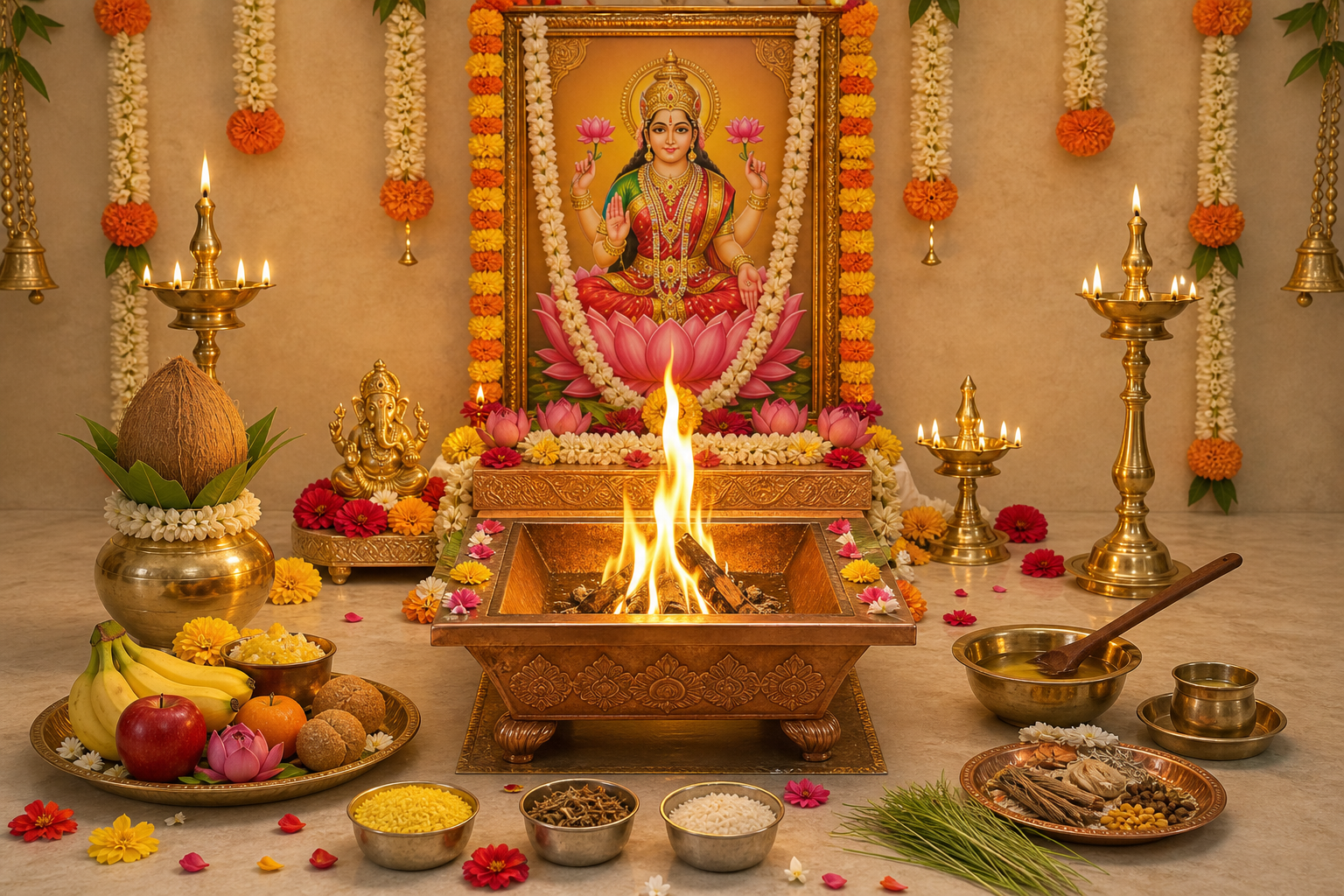
Sri Mahalakshmi Homam Puja
Guided, step-by-step ritual with translations and AR setup assistance.
Pay it forward

Foundation For Excellence supports merit-cum-means scholarships for bright students in India who have the grades but not the means. Their programs include tuition support, mentoring, and skill-building workshops for engineering, medical, and law students. Since 1994, FFE has helped create more than 160,000 scholarships and a growing alumni network that often gives back to support the next generation.
Donations are processed directly by Foundation For Excellence.
Timing
Year-round; especially Fridays and auspicious Lakshmi days
Best Month
Any
Puja Methods
Telugu, Vedic, Homam
Languages
English, Telugu
Why this Puja?
Sri Mahalakshmi is worshipped as the divine source of auspicious wealth, nourishment, beauty, courage, generosity, and household well-being. A homam offers prayers through Agni, the sacred fire, so each mantra and ahuti becomes a focused act of surrender and invitation. This ritual is especially meaningful for families seeking prosperity that is guided by dharma, stability in the home, clarity in effort, protection from obstacles, and gratitude for the abundance already present.
When to Perform
Can be performed year-round
Especially meaningful on Fridays, during Deepavali season, on auspicious Lakshmi worship days, before major financial or household beginnings, or whenever the family seeks prosperity, stability, and divine grace.
Who Should Perform
Anyone may perform or participate in Mahalakshmi Homam with sincerity and care. It is well suited for families praying for prosperity, health, harmony, protection, children’s well-being, business growth, career stability, and a peaceful home. Beginners can follow the guided version step by step, while devotees familiar with homam can use the longer format for a fuller traditional sequence.
What Makes This Puja Special
Distinctive ritual and devotional elements, and how they help the practicing devotee.
Agni-Centered Lakshmi Worship
Sri Mahalakshmi Homam offers prayers through Agni, the sacred fire, so every mantra and ahuti becomes an act of surrender carried by flame. Unlike a simple archana, the homam transforms ghee, herbs, and offerings into a disciplined invocation of Lakshmi's auspicious grace. For the devotee, this creates a powerful meditation on abundance, purity, generosity, and prosperity guided by dharma.
Safe and Ordered Homa Preparation
The master structure gives special attention to homa kundam setup, fireproof base, ghee placement, dry coconut or wood, camphor, and safe preparation before Agni is invoked. This is not merely logistical; it reflects respect for fire as a sacred presence. For the devotee, careful preparation builds steadiness, responsibility, and reverence before beginning the fire ritual.
Mahalakshmi Ahuti Sequence
The central homam section guides repeated offerings to Mahalakshmi with mantra, intention, and physical ahuti. Each offering becomes a way to place effort, gratitude, obstacles, and hopes into the sacred fire. This helps the devotee experience prosperity as something purified and offered back to the divine, rather than treated as mere material gain.
Poornaahuti and Closing Protection
The ritual culminates in poornaahuti, bali, closing prayers, and respectful completion of the fire worship. Poornaahuti represents fullness: the devotee offers the completed intention and receives the homam as blessing. The closing sections help seal the ritual with gratitude, protection, and a sense that Lakshmi's grace should support both household wellbeing and inner generosity.
What PujaZen Guides You Through
A complete ritual experience — from setup to closing blessings.
Prepare
- Materials & shopping list
- Altar layout with AR guidance
- Kalasha setup
Personalize
- Sankalpa — your personal intention
- Your name, family & occasion
- Personalized invocation
Purify
- Achamanam & Pranayama
- Prokshanam purification
- Kalasha Puja & Prana Pratishtha
Offer
- Guided Shodashopachara sequence
- Snanam, Gandham, Pushpam, Vastram
- Anga Puja, Patra Puja & Durva Puja
Complete
- Naivedyam & Tamboolam
- Aarti & Pradakshina
- Prasadam & closing blessings
Key Mantras
A sample of sacred verses from this puja — heard and chanted step by step inside PujaZen.
Introduction
om shrī mahāganapataye namah shrī gurubhyo namah shrī mahālakshmyai namah
This opening invocation marks an auspicious beginning. It seeks Ganesha's and the Guru's grace before the sacred fire ritual.
Used in: Recited during Introduction
Sankalpam
om mamopātta samasta duritakshayadvārā shrī parameshvara prītyartham shrī mahālakshmī prasāda siddhyartham adya shubhadine shubhamuhūrte
This mantra states that the homam is offered for Mahalakshmi's grace. It gives the ritual a clear devotional purpose.
Used in: Recited during Sankalpam
Mahalakshmi Prana Pratishtha
asya shrī prānapratishthāpana mamtrasya brahmā vishnu maheshvarā rushayah rugyajussāmātharvāni chhamdāmsi shrī mahālakshmī devatā shrīm bījam
This mantra invokes the sacred presence of Mahalakshmi. It asks that her grace be established in the homam.
Used in: Recited during Mahalakshmi Prana Pratishtha
Suddhaanna Bali
om pārshadebhyo namah, balim samarpayāmi
This mantra offers bali to the attendant deities. It asks for peace and support around the homam.
Used in: Recited during Suddhaanna Bali
Conclusion
mamtrahīnam kriyāhīnam bhaktihīnam hutāshana yaddhutam tu mayā deva paripūrnam tadastu te prāyashchittānyasheshāni tapah karmātmakāni vai yāni teshāmasheshānām shrī krushnasmaranam param
These mantras ask forgiveness for shortcomings and pray that the ritual be complete. The homam ends with peace, surrender, and gratitude.
Used in: Recited during Conclusion